My first encounter with true name magic was almost certainly A Wizard of Earthsea by Ursula K. Le Guin (and the remainder of The Earthsea Cycle). I would also come to appreciate the "genre" though Egyptian mythology, and even the tale of Rumpelstiltskin. In terms of gaming, however, I fell in love with it via Wizard's Tome of Magic for 3rd Edition. While this book did not present the most sound mechanics for this style of magic, it made a valiant effort. My love was further cemented with Green Ronin's Testament, written for the same edition--though true names were a more subtle edition here.
I had once attempted to synthesize the systems from the Tome of Magic and Testament while simultaneously upgrading the result to the Pathfinder revision. I have lost those rules, but do recall not exactly being pleased with the direction I was going. It is not the easiest style of magic to present for tabletop RPGs--typically when every individual has their own true name. This would explain the universal language concept used in Tome of Magic. Paizo would later revisit a similar concept with their Words of Power system in Ultimate Magic.
Recently, Wizards has revisited true name magic for 5th Edition in an Unearthed Arcana supplement. Here, it is called onomancy. Below, I show how onomancy can have a place in my 5th Edition campaign setting, Monvesia.
Showing posts with label Pathfinder. Show all posts
Showing posts with label Pathfinder. Show all posts
Friday, October 18, 2019

Wednesday, August 9, 2017
Foolishness Check
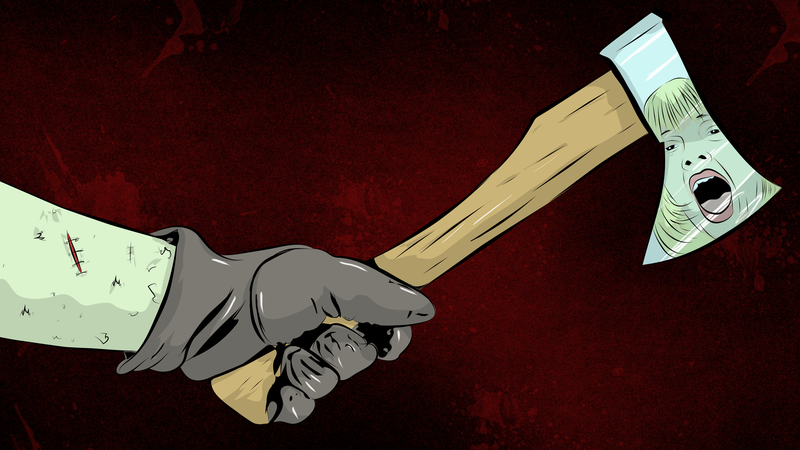
While running a "summer slasher flick" one-off adventure for d20 Modern, I wanted to make sure that the characters still acted like the idiots we normally see in horror films--particularly since all my players were horror fans, and certainly knew better. Below is the mechanic I settled on. It added a sense of plausibility to the genre, and the players loved it.
Since the trope ultimately has its origins in gothic literature, the Foolishness Check would also be appropriate in a gothic fantasy setting/story. It may now, however, be used as frequently as in a modern horror game with victim-style characters. Since that slasher game, I have kept the mechanic in my back pocket to use whenever I feel the need.
Sunday, July 3, 2016
I'm DMing Without XP, and my Players aren't B*%@#ing about It
I have received some ... dissenting opinions in response to my post "Eliminating XP." The general theme of these responses is that XP are a good way to reward characters not only for the typical reasons, but also for ingenuity and playing in-character. I attempted to advance the idea that these could be rewarded using game mechanics other than XP. However, my initial post doesn't really go into this--it glosses over it with links to another post wherein Hero Points are discussed in an epilogue. I have since made an effort to gain some experience with this type of play, and will share with your my experience and insight.

As most of you should be aware, I have been running a Pathfinder campaign since last fall. In this campaign, I have chosen to avoid experience points. My regular players include two D&D veterans, two players with only a couple of years experience, and two brand new initiates into RPGs. When I informed them that I would be awarding experience levels based on attendance and participation instead of combat, no one complained. When I told them they would receive Hero Points as rewards for special actions, they didn't really know what I was talking about.
As most of you should be aware, I have been running a Pathfinder campaign since last fall. In this campaign, I have chosen to avoid experience points. My regular players include two D&D veterans, two players with only a couple of years experience, and two brand new initiates into RPGs. When I informed them that I would be awarding experience levels based on attendance and participation instead of combat, no one complained. When I told them they would receive Hero Points as rewards for special actions, they didn't really know what I was talking about.
Monday, June 27, 2016
Nefret, Chapter 12: The Walled Shrine
The tribe of Maftets that Tetisurah suggested the party visit was due near Hut-Ra-Neskef (formerly Oasis) a month ago--but their visit appears to have been delayed. The town leaders are concerned for the safety of their allies in the wilderness. Before visiting Oasis, the maftets would stop at a walled shrine two weeks travel away--perhaps someone should go there to see if they can learn of the tribe's fate.

Important Locations
Parched Dunes
The parched dunes are a region of the great desert beyond Tem-Akh--a mix of flowing sand, badlands, craggy rock, and hills. It is the Parched Dunes that seperate the Nefret River valley from the catfolk homeland of Tamisha. Here, there are many natural dangers, some ruins, and even fewer settlements.
Sunday, June 26, 2016
History of Nefret: Fall of the Sphinx Empire & the Coming of the Netjer
While Nyala, Jaeth, and Kiji gathered followers in Oasis, Aloysa and Crenn took that time to compile the notes they had gathered to date in hopes of forming a cohesive history of the Sphinx Empire. Here are the facts that they were able to compile. The "facts" below represent what the current evidence suggests to be true. As the player delve further into the mysteries of the Aten and its past, these facts will evolve. ... Y'know, like the way real history books work ;-p

The Last Sphinx Queen
Before the rise of the elves in Nefret, the land was ruled by two, competing nations: The Sphinx Empire in the desert and plains, and the Great Kingdom of the Naga in the swamps and mountains. The "lesser," humanoid races were the servants of these greater beings. Though the nations were never explicitly at war one with another, the peace between them was rough at times. After the sphinx queen Ankharet had achieved a semblance of immortality, she took the golden naga Kozuragen as her consort. Peace between the sphinxes and he nagas seemed almost certain--a peace that would come to be symbolized by half-breed princess Meraph.
Sunday, May 1, 2016
Nefret, Chapter 11: Interlude at Oasis
You seek out the nearest village to rest, recuperate, and recharge--and also to wait for Cecil, in case he may return. Though the aptly named Oasis is a small village, it [remarkably] has what you have been looking for. Though short on some basic supplies, the town does have a ready supply of the exotic metal adamantite. This offers Jaeth and Aloysa a chance to equip the party with better gear.


Important Locations
Parched Dunes
The parched dunes are a region of the great desert beyond Tem-Akh--a mix of flowing sand, badlands, craggy rock, and hills. Here, there are many natural dangers, some ruins, and even fewer settlements.
Nefret, Chapter 10: The Tomb of Chisisek
Upon Nephethus's suggestion, you have left Tem-Akh--and made your way into the Parched Dunes in order to search for the Tomb of Chisisek. You find yourself in the region of the desert marked by major landmarks referenced in the mural at the Vault of Hidden Wisdom, As minor landmarks from an automatic writing by Ribiah appear on the horizon, you realize that you are on track. There is still a lot of sands and rocky crags and badlands between you and your goal.

Important Locations
Parched Dunes
The parched dunes are a region of the great desert beyond Tem-Akh--a mix of flowing sand, badlands, craggy rock, and hills. Here, there are many natural dangers.
Wednesday, March 9, 2016
Nefret, Chapter 9: Libraries of Tem-Akh
An emissary has arrived from Aloysa's tribe in Tamisha with letters of reference in order to grant the party access to the Great Chamber of Knowledge in the city's esteemed library. Letters in hand, the party ventures forth into the library, to uncover whatever secrets they can about the Sphinx Empire, the Thrice-Divided Soul, or even the Hungry Cloud.


Important Locations
City of Tem-Akh
Tem-Akh was once the capital of the Three Kingdoms--until Atenhotep I declared a holy land for his new religion and moved the capital there. The city is divided into four districts, which were successive expansions to the city's limits.
- The Old City is a walled sanctum in the center of Tem-Akh, where the old Pharaonic palace, the Great Library, and the Temple of Ra are located. It is a priestly quarter.
- The New City grew between the Old City and the river. It is a noble quarter.
- Wadjet's Walk grew around a canal that had been cut around the Old and New Cities in hopes of increasing commerce and trade in the capital. It is a merchant quarter.
- The Outer City is the result of inevitable urban sprawl. It is primarily a slum.
Monday, February 8, 2016
Military Power in Nefret
In the downtime after recovery of the Mask of the Sphinx God, Ibankhkhnum (and his pet jackal Pawet) joined the party. Among the various benefits to having a former captain of Pharaoh's Guard in the party is the intelligence he can provide about the factions working in the government. During an early conversation with him while traveling to Tem-Akh, Iban clarified the structure of military power in Nefret.
There are two military organizations in the Nefretic Empire: the Pharaonic Guard and the Order of the Medjay. To the common citizen, the Guard and the Order are the same organization, as they can be seen serving similar roles--and often working together. The primary difference between these two organizations is that the Pharaonic Guard serves the Pharaoh directly, while the Order of the Medjay serves the office of the Pharaoh.
There are two military organizations in the Nefretic Empire: the Pharaonic Guard and the Order of the Medjay. To the common citizen, the Guard and the Order are the same organization, as they can be seen serving similar roles--and often working together. The primary difference between these two organizations is that the Pharaonic Guard serves the Pharaoh directly, while the Order of the Medjay serves the office of the Pharaoh.
Pharaonic Guard
The Three Kingdoms, which form the central and most influential empire of the known world, are protected by an armed forced known as the Pharaonic Guard (or Pharaoh's Guard). This group is a national defense and peacekeeping force which is directly commanded by the Pharaoh of the Three Kingdoms. A Chief Deputy is appointed by the Pharaoh to lead the guardsmen in each of the Kingdoms.Sunday, February 7, 2016
Nefret, Chapter 8: Secrets of Peraten
Nebta-Khufre, necromancer and accessory to murder, has been captured; the Mask of the Sphinx God he'd recovered from Wati and used to raise an army of undead against you has been confiscated. Now you stand poised in the Servitor's Court on the lower level of the Sepulcher of the Servant, before a stairwell descending even deeper into the Valley of the Princes. Ibankhkhnum and Meret-Hetef await your return on the upper level of the Sepulcher.
 |
| Desert City by Concept-Art-House on deviantart |
Sunday, January 31, 2016
Nefret, Chapter 7: Sepulcher of the Servant
Ibankhkhnum has gone missing. The last time you saw him was at Kiji's trial. After your meeting with Natari, you had hoped to check in on the Wati murder investigation--but Iban could not be found. Asking around among the other guards, you encounter only vacant stares are closed lips. Of the two other guards participating in the investigation, one was as unhelpful as his peers--though he let his terror be more obvious. The other, however, is unable to speak as his tongue was removed (an act reserved for convicted heretics and unwelcome witnesses of state secrets).

Important Locations
Peraten
The city is composed of three districts, one for each of the dominant races of the Three Kingdoms:- Elf (Northern) District is located between the Great Temple of the Sun and the Palace of the Pharaoh. I\t is here that the most powerful nobles of the city live; it is also includes the central market, which attracts the largest percentage of visitors to the city. Some catfolk and cattlefolk also makes their homes here.
- Dogfolk (Western) District is located south of the Great Temple of the Sun, and includes the Lesser [or Funerary] Temple of the Sun. Funerary processions for the royal family begin at this temple, then pass through each other district before continuing on to the royal tombs. Some grippli, humans, and lizardfolk also make their home here.
- Tengu (Eastern or Upper) District is located east of the Great Temple of the Sun, and rests on a hill above the Peraten. Some dwarves, nagaji, and vanaras also make their homes here.
Thursday, January 14, 2016
Nefret, Chapter 6a: Garden of the Vizier's Daughter
Having returned to Peraten, despite Oshep's seemingly best efforts in Wati, you have decided to infiltrate the nobleman's estate. The plan is as follows: Cecil will disguise himself as a servant and sneak around the house looking for information about the Embalmers' Guild. Posing as merchants (though not a far stretch), Pleebit, Nyala, and Jaeth (their bodyguard) will meet with [ie., distract] Oshep and Natari in Natari's garden. While Aloysa waits at the back of the estate in the servants quarters in case of trouble, Kiji will do the same outside the front gate ... while preaching anti-heresy in the streets to gather a crowd if necessary for escape.

Wednesday, December 30, 2015
Trickster Spell List
In my last post, I introduced a Trickster base class for Pathfinder. This class combines low-level elements of the rogue and wizard with the arcane trickster prestige class. Though I am not the first to have created this type of hybrid, my version is particular to my current Pathfinder campaign--made for a specific player whose multi-classing placed his character behind his peers.
By crafting a new base class, it also gives me the chance to customize the class's spell list. Like the Magus, the Trickster has a spell book that must be studied, but may only learn spells from his class list. Spells were selected for this list base on reinforcing roguish abilities; over-the-top, flashy spells were either left our, or increased in level for this class. As with the class itself, play-testing will likely result in modifications to this spell list.

Dancing Lights: Creates torches or other lights.
Daze: A single humanoid creature with 4 HD or less loses its next action.
Detect Magic: Detects all spells and magic items within 60 ft.
Flare: Dazzles one creature (–1 on attack rolls).
Ghost Sound: Figment sounds.
Know Direction: You discern north.
Light: Object shines like a torch.
Mage Hand: 5-pound telekinesis.
Open/Close: Opens or closes small or light things.
Prestidigitation: Performs minor tricks.
Ray of Frost: Ray deals 1d3 cold damage.
Read Magic: Read scrolls and spellbooks.
Sift: See area as though examining it.
Spark: Ignites flammable objects.
By crafting a new base class, it also gives me the chance to customize the class's spell list. Like the Magus, the Trickster has a spell book that must be studied, but may only learn spells from his class list. Spells were selected for this list base on reinforcing roguish abilities; over-the-top, flashy spells were either left our, or increased in level for this class. As with the class itself, play-testing will likely result in modifications to this spell list.
There has been talk among my players about creating archetypes for this class as well--but we will see what our needs are.

0-Level
Acid Splash: Orb deals 1d3 acid damage.Dancing Lights: Creates torches or other lights.
Daze: A single humanoid creature with 4 HD or less loses its next action.
Detect Magic: Detects all spells and magic items within 60 ft.
Flare: Dazzles one creature (–1 on attack rolls).
Ghost Sound: Figment sounds.
Know Direction: You discern north.
Light: Object shines like a torch.
Mage Hand: 5-pound telekinesis.
Open/Close: Opens or closes small or light things.
Prestidigitation: Performs minor tricks.
Ray of Frost: Ray deals 1d3 cold damage.
Read Magic: Read scrolls and spellbooks.
Sift: See area as though examining it.
Spark: Ignites flammable objects.
Monday, December 21, 2015
Rethinking Hybrid Classes - The Trickster
Back in October, I posted about the multi-classing rules in Pathfinder. I did this because I favored the hybridizing prestige classes (Arcane Trickster, Eldritch Knight, Mystic Theurge) instead of the hybrid base classes from the Advanced Class Guide--and I wanted characters who followed the prestige class path to be on-par with single-class characters. However, this "fix" has only served to make the rules more bulky--and there is too much for players--particularity new players--to remember.
On second thought, the Magus isn't a bad class. In fact, it is better at being an Eldritch Knight than a Fighter / Wizard / Eldritch Knight. Are there base classes that do this for the Arcane Trickster and Mystic Theurge? Not in the Advanced Class Guide--so my distaste for the hybrid classes in that book remains. My distaste for the concept of hybrid classes is in question, though.
In fact, hybrid classes have been a part of Dungeons & Dragons for several edition:
On second thought, the Magus isn't a bad class. In fact, it is better at being an Eldritch Knight than a Fighter / Wizard / Eldritch Knight. Are there base classes that do this for the Arcane Trickster and Mystic Theurge? Not in the Advanced Class Guide--so my distaste for the hybrid classes in that book remains. My distaste for the concept of hybrid classes is in question, though.
In fact, hybrid classes have been a part of Dungeons & Dragons for several edition:
- Bard = Enchanter / Rogue [originally a Fighter-Thief-Druid "prestige class"]
- Paladin = Fighter / Cleric
- Ranger = Fighter / Druid [originally also Wizard]
- Alchemist = Transmuter / Rogue
- Inquisitor = Cleric / Rogue
- Magus = Fighter / Wizard
Friday, December 18, 2015
Nefret, Chapter 6: Pyramid of Arithmetic Bliss
A new name for this chapter because of the direction the players went with it. The Garden of the Vizier's Daughter shall not be forgotten, however.You have reported to Iban concerning Ekram's exile, and he applauds your decision as being the best course of action. While it is true that the Order of the Medjay is above the law, it is best not to have one willing to kill the Pharaoh's own free in the Pharaoh's city. As a reward for your service, Iban has offered you a handy haversack filled with treasures--contraband that Ekram had abandoned when he was forced to leave Peraten.
Iban also has more information about the Wati murders: Namely, that Ekram wasn't working alone. During their interrogations, every member of Velriana's team (including Uzoma, our portly vanara hireling) had mentioned encountering a necromancer at some point during the day in question. As these accounts did not generally agree, the necromancer was initially assumed to be a lie meant to divert attention from Velriana's motivations. However, casual discussions with Ekram's associates revealed that the enforcer had recently begun working closely with the Embalmer's Guild--so Iban is now willing to accept the existence of a necromancer. With the recent disappearance of specially trained embalmers, hunting down Ekram's necromancer ally has been difficult--particularly if the Medjay are, in fact, working with the guild.
Investigating the Order of the Medjay is dangerous, and Iban is afraid that his questioning into the murders has made him a target. However, if a necromancer was involved, then the immunity of the Medjay would not protect him. The nobleman Oshep (the one who granted Velriana access to Wati) had previously hired a team from the Embalmer's Guild to investigate a shrine in the dead city. The leader of this team was an alchemist named Nephethus (!). Since Nephethus "does not have any known associates in Peraten" according to Iban, he would like someone to investigate Oshep.
Friday, December 11, 2015
Simplifying Pathfinder: More than One Attack
While running my Nefret campaign and continuing to develop/convert my Monvesia campaign, I find the sleeker ruleset of 5th Edition very attractive. Is it possible to create the same feeling for Pathfinder? Possibly.
One major rules redundancy in Pathfinder (which is inherited from 3rd edition), is making more than one attack during combat. Three rules systems operate simultaneously: two-weapon fighting, natural attacks (including secondary natural attacks), and multiple attacks. These rules are scattered throughout the combat chapter, each confusing the next.

While these rules can be understood, they present a lot of exceptions and alternate circumstances. The fewer circumstances you have to think about during the game--the less intrusive that the rules are--the more fun the game will be. Therefore, I propose merging the concept of off-hand attack with the secondary natural attack. These basics of this are:
One major rules redundancy in Pathfinder (which is inherited from 3rd edition), is making more than one attack during combat. Three rules systems operate simultaneously: two-weapon fighting, natural attacks (including secondary natural attacks), and multiple attacks. These rules are scattered throughout the combat chapter, each confusing the next.
While these rules can be understood, they present a lot of exceptions and alternate circumstances. The fewer circumstances you have to think about during the game--the less intrusive that the rules are--the more fun the game will be. Therefore, I propose merging the concept of off-hand attack with the secondary natural attack. These basics of this are:
- As a full round action, a character may make as many primary and secondary attacks as one's level, feats, and race/species may allow.
- A secondary attack must be made with a light weapon (unarmed strikes and natural attacks count as light weapons)
- A secondary attack is made at -5 to the attack roll; and only one-half of a character's strength modifier (if any, rounded down) applies to damage.
Friday, December 4, 2015
Nefret, Chapter 5: Into the Valley of the Princes
It has been ten days since Aloysa left for Tamisha, and now she returns to Peraten with a spotted tiger at her heals. Unfortunately, she returns with little additional information regarding the thrice-divided soul--merely that it is a reference to an ancient empire that ruled long before the dynasties of Nefret. The elders of Aloysa's clan do not believe this empire, said to be ruled by sphinxes, to be historical fact--merely folklore relating to the Mythic Dynasty.
Upon her return, Aloysa and Kiji are approached by Ibankhkhnum, a captain of Pharaoh's guard. He explains that he has been assigned to investigate the murder of the Wati guards (which the party had reported). After interrogating Velriana and Uzoma, he investigated both the Wati gate and the Sanctum of the Erudite Soul. From this, Iban has a lead as to the whereabouts of the suspected murderer. Unfortunately, he cannot trust his own men to investigate--for the perpetrator may be a member of the Order of Medjay, a special branch of the royal guard. As you had expressed interest earlier in assisting the investigation, Iban was hoping that he could call on the party now.
Your particular skills, he believes, will be an asset--for he is relatively certain that the murderers are hiding out in the Valley of the Princes, beyond the Pyramid of Sekh-pa-Mefer III. Unearthed at the same time as the pyramid, the tombs in this valley remain untouched--only a few just outside the valley, in the shadow of the pyramid, have been looted. In addition to not being able to trust his men with the identity of the murderer, he also cannot trust them not to damage history in their investigation. An unbiased team including both an archaeologist and an inquisitor is ideal.

Upon her return, Aloysa and Kiji are approached by Ibankhkhnum, a captain of Pharaoh's guard. He explains that he has been assigned to investigate the murder of the Wati guards (which the party had reported). After interrogating Velriana and Uzoma, he investigated both the Wati gate and the Sanctum of the Erudite Soul. From this, Iban has a lead as to the whereabouts of the suspected murderer. Unfortunately, he cannot trust his own men to investigate--for the perpetrator may be a member of the Order of Medjay, a special branch of the royal guard. As you had expressed interest earlier in assisting the investigation, Iban was hoping that he could call on the party now.
Your particular skills, he believes, will be an asset--for he is relatively certain that the murderers are hiding out in the Valley of the Princes, beyond the Pyramid of Sekh-pa-Mefer III. Unearthed at the same time as the pyramid, the tombs in this valley remain untouched--only a few just outside the valley, in the shadow of the pyramid, have been looted. In addition to not being able to trust his men with the identity of the murderer, he also cannot trust them not to damage history in their investigation. An unbiased team including both an archaeologist and an inquisitor is ideal.

Wednesday, December 2, 2015
Sphinxes [Etc.] of Nefret
In Nefret, the role that would traditionally be served by dragons in other fantasy settings is instead served by Sphinxes. Because of this, one partocular aspect of the 3.x rules needs to be modified: Creature types. With so few dragons and dragon-kin in the world, it does not make sense
for "Dragon" to be a unique creature type. On the other hand, the
prominence of sphinxes and sphinx-kin may benefit from the creation of a
"Sphinx" creature type.

Another aspect related to this that was already changed in play was the replacement of the Draconic language with the Sphinx language where it applies to arcane magic. Furthermore, sorcerers do not have the option of a draconic bloodline (neither a sphinx bloodline, for that matter).
Monday, November 23, 2015
Nefret, Chapter 4: Risen From the Sands
A letter has arrived at the Tooth and Hookah for our party of heroes.

Dearest Companions,
It is with deepest regrets that I must take my leave from you all for an indeterminate period. The work I have been doing for the Embalmers' Guild--of which I am not at liberty to disclose--requires me to travel to Tem-Akh. My duties there will require my full attention.
It has been a pleasure working with you all. I do not know when, or even if, I will be able to join you again. Should our paths cross, I look forward to that meeting.
Regards,
NephethusRumors throughout Peraten indicate that specially trained embalmers from throughout the city (and even elsewhere) have been recalled to Tem-Akh, the old capital. As with Nephethus, many left before giving any indication that they would be gone for some time. Some notices included requests not to follow. The other embalmers who remain in the city to provide funerary services either feign ignorance of the "recall," or else refuse to discuss it.

Friday, November 6, 2015
Nefret, Chapter 3: The Sanctum of the Erudite Soul
Lady Sebti has agreed to let you explore one more site in Wati: the Sanctum of the Erudite Soul, a temple to the minor netjer Heka. Her only interest, she says, is that the previous team she'd hired insisted on being allowed to explore this site. Sebti wants to know why.
While Kiji explored non-Aten worship near Peraten, Aloya spent time in the library at the Great Temple of the Sun. She did research into the names Heka and Imanesh (the demonic head encountered in the House of Pentheru). The only reference to Imanesh was a list of "malignant spirits" of Duat who were counted among the servants of Apep. For Heka, the appellation of "Activated Soul" was uncovered, as well as his iconography--the holy symbol of his faith being a knot of flax between upraised arms (the heiroglyphs used to write his name). You have seen this symbol before--being worn as amulets by Velriana Hypaxes and her companions.
Heka appears to have two forms, historically: a man choking two entwined snakes; and a child holding a flail and wearing nothing but an elaborate crown. Heka is a minor netjer of magic and medicine--portfolios more often associated with Isis and Thoth.
While Kiji explored non-Aten worship near Peraten, Aloya spent time in the library at the Great Temple of the Sun. She did research into the names Heka and Imanesh (the demonic head encountered in the House of Pentheru). The only reference to Imanesh was a list of "malignant spirits" of Duat who were counted among the servants of Apep. For Heka, the appellation of "Activated Soul" was uncovered, as well as his iconography--the holy symbol of his faith being a knot of flax between upraised arms (the heiroglyphs used to write his name). You have seen this symbol before--being worn as amulets by Velriana Hypaxes and her companions.
 |
| Amulet worm my Velriana Hypaxes |
Subscribe to:
Posts (Atom)