The Pyrosphere contributes its energy to four of the Transitive Planes: Faerie, the Abyss, the Empyrean, and the Inferno. Faerie and the Abyss share the Lithosphere as well, grounding them in earthly realities. The Empyrean and Inferno, on the other hand, both fuel the fire of the Pyrosphere with the wind of the Aerosphere. There are both engulfing flames that reach eternally--one into the light of the Hierosphere, and the other into the void of the Necrosphere. For this reason, they are commonly called the Fire Above and the Fire Below.
Though not in opposition to each other, elementally or temperamentally speaking, they are still treated as a rival pair: The Empyrean a plane of "righteousness" as the home of the Celestials and theer Virtues; the Inferno a plane of "wickedness" as the home of the Fiends and their Vices. This is not the dichotomy of good and evil however; it is closer to Freud's pairing of the Superego and the Id--with he Material Plane as the Ego caught in between.
Both the Empyrean and the Inferno are composed of an otherworldy form of matter called aether (sometimes luminiferous aether). This is the matter through which light travels. In the Empyrean the aether in infused with light, while in the Inferno it is devoid of light. These planes have therefore also been called the Aetheric Planes: distinguished as the Empyreal Aetheric and the Infernal Aetheric. As such, they are the Ethereal Planes of Monvesia, bound in part by the solar dominion of Helyon.
Wednesday, August 29, 2018

Sunday, August 26, 2018
Miscellaneous House Rules (5e D&D)
No rules set an perfectly appease all players. When it comes to Dungeons & Dragons, this isn't a problem. House rules have been a part of the game since the beginning; dungeon masters were encouraged to customize the rules to their needs. These rule sets, after all, are guidelines for play--the experience of the game trumps the mechanics.
Below are a few house rules for games that I run:
Below are a few house rules for games that I run:
Initiative
Initiative is not only the ability to react, but also the ability to perceive one's surroundings and judge the best course of action. Therefore, an initiative roll should incorporate Wisdom in addition to Dexterity. A simple Dexterity check, though an easy mechanic, does not suffice; though adding a new mechanic would be too bulky. I prefer to modify the core mechanic as follows:
Friday, August 24, 2018
Virtues of Monvesia
With angels redefined as divinities, the ranks of celestial creatures have been diminished. What remains from the core rules has been augmented with sphinxes and a horned serpent in order to fill the Empyrean with majestic beings of law and goodness. The greatest of these beings are the Virtues--most of which embody two or more celestial creatures.
The Virtues of the Empyrean are companions to the Vices of the Inferno. Though goodness (Altruism) and chaos (Vitalism) are not necessarily at odds, these two groups represent represent opposing ideals. Indeed, not even their Transitive Planes are in opposition; in fact, both planes share influence from the Aerosphere and the Pyrosphere. For this reason, the planes are sometimes called the Fire Above (Empyrean, influenced by the Hierosphere) and the Fire Below (Inferno, influences by the Necrosphere).

The Virtues of the Empyrean are companions to the Vices of the Inferno. Though goodness (Altruism) and chaos (Vitalism) are not necessarily at odds, these two groups represent represent opposing ideals. Indeed, not even their Transitive Planes are in opposition; in fact, both planes share influence from the Aerosphere and the Pyrosphere. For this reason, the planes are sometimes called the Fire Above (Empyrean, influenced by the Hierosphere) and the Fire Below (Inferno, influences by the Necrosphere).
Thursday, August 23, 2018
Classifying Monvesian Creatures: Anachronisms, Doubles, Thoughtforms
Three new creature types were created for Monvesia in order to associate one creature type with each transitive plane as its daemon. While several creatures were reclassified into these types, several more still need to be created. In this post I will review the various creatures that can and will fill the ranks of these types.

NOTE: Three races from the Eberron campaign setting could find their way into Monvesia through these creature types: Warforged as mortal modrons or inevitables; changeings as doppleganger descendants; or even kalishtar as embodied thoughtforms.
Wednesday, August 22, 2018
Planes of Monvesia: Endless Companions
The world of Monvesia recognizes several more transitive planes than most other D&D worlds. Two of these have no counterparts at all among the traditional planes of 5th Edition: Infinity (including "Per Speculum", the Mirror Plane) and Eternity (the Temporal Plane). While analogs for each had existed in earlier editions of the game, they were treated as minor, variant planes.
In the setting of Monvesia, these two planes also form a "companionship"--a trait common to the Transitive Planes. These two planes share in common connections to the Lithosphere, the Hydrosphere, and the lunar dominion of Sylane. They are functional, practical planes that affect the structure of the Material Plane and how mortals interact with it.
In the setting of Monvesia, these two planes also form a "companionship"--a trait common to the Transitive Planes. These two planes share in common connections to the Lithosphere, the Hydrosphere, and the lunar dominion of Sylane. They are functional, practical planes that affect the structure of the Material Plane and how mortals interact with it.

Functional Orbs
The far reaches of the transitive planes contain gateways of energy that act as gateways to the worlds beyond. On the functional planes, these take the form of colored, pearlescent orbs, 1d6 x 10 feet in diameter. These gateways can be identified by color:
- White, Hierosphere (elemental plane of light) [Reflection]
- Purple, Orbimond (material plane)
- Bright Yellow, Hesperia [Reflection]
- Gold, Lithosphere (elemental plane of earth)
- Brown, Stygia [Eternity]
- Olive, Utopia
- Lime Green, Arcadia [Reflection]
- Green, Hydrosphere (elemental plane of water)
- Forest Green, Tartarus [Eternity]
- Black, Necrosphere (elemental plane of void) [Eternity]
Tuesday, August 21, 2018
Monvesian Culture: Calendars
Dozens of peoples call the lands of Monvesia home. Each has its own customs and taditions, and many diverge from a common history. Among these cultures, three calendars have become dominant: one perpetuated by human advancement; one consolidated from divergent, native customs; and one that tracks only the simplest recurring events.
For followers of the philosophical temperaments, regardless of denomination, the seasons hold spiritual significance, as each is associated with a particular element and temperament. The seasons, including the feast day which precedes them, are treated as a Zodiac of sorts: The season one is born in has an influence on your personal and interpersonal development.
Senarian Calendar
The common calendar of Monvesia is divided into six seasons of 60 days each, each of which is preceded by an extracalery festival related to one of the philosophical temperaments—for a total of 366 days. While each philosophical priesthood counts its own high holy day as the beginning of the liturgucal year, it is the Feast of Spiritual Thought that is most commonly used as the secular new year.For followers of the philosophical temperaments, regardless of denomination, the seasons hold spiritual significance, as each is associated with a particular element and temperament. The seasons, including the feast day which precedes them, are treated as a Zodiac of sorts: The season one is born in has an influence on your personal and interpersonal development.
Monday, August 20, 2018
Classifying Monvesian Creatures: Divinities
I introduced the idea of divininties as part of "Planar Inhabitants of Monvesia," and later included similar information in "Classifying Monvesian Creatures." Here, I will collect all the information about this new creature type and further explore their hierarchies.
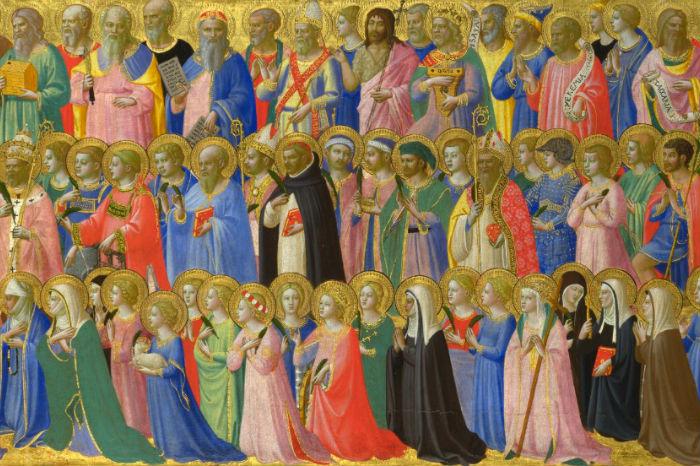
Divinities are powerful creatures native to the Dominions. They include monsters once classified as Celestials and Fiends (particularly Angels, Demons, and Devils--now all considered Angels), as well as two new creatures: Aeons and Saints. While arch-daemons and genie nobles are unique among their types for their ability to help mortals ascend to immortality, any divinity may do so--including recently ascended saints.
Divinities are powerful creatures native to the Dominions. They include monsters once classified as Celestials and Fiends (particularly Angels, Demons, and Devils--now all considered Angels), as well as two new creatures: Aeons and Saints. While arch-daemons and genie nobles are unique among their types for their ability to help mortals ascend to immortality, any divinity may do so--including recently ascended saints.
Subscribe to:
Posts (Atom)