Showing posts with label clerics. Show all posts

Thursday, April 23, 2020

Monvesian Culture: God-King Cults

In the west, there is a tradition of deifying the leaders of empires.  Clerics may serve these rulers and the cults of their glory as if they were gods or saints.  These traditions are formalized cults of personality.  These priesthoods are long-standing, but the "living saints" they venerate change over time.  Three god-kings have risen to prominence:  the Pharaoh of Raviq, the Mikado of Fuhon, and the Nagaraja of Henjal.

In Prace, a similar cult of personality has also developed around the Emperor of Dray--but the semi-theocratic nature of the Empire prevents the Emperor from arising to the status of god-king.  Given the nature of the Temperamental Orders, however, the Order favored by the Emperor tends to be favored by the nobility as well.

Clerics of the God-Kings

When in service to a god-king, a cleric must choose a domain from those spheres related to the ruler's dominant alignment.  Keep in mind, however, that inheriting the mantle of a god-king will affect one's alignment points:

  • Pharaoh, gain 2 AP each in Dynamism and Vitalism
  • Mikado, gain 2 AP each in Idealism and Materialism
  • Nagaraja, gain 2 AP each in Vitalism and Nihilist

Should a god-king have no clear dominant alignment, then the spheres of the title's temperamental association should be used.

As alignment in Monvesia is fluid, a god-king's dominant alignment will change over time--and successors may be of vastly different alignments than their predecessors. Clerics of the god-kings, therefore, must adapt to the temperaments of their rulers.  Should a cleric's domain become unavailable during play, a new domain must be selected.  All abilities of the old domain are lost, and any abilities of the new domain appropriate to the cleric's level are gained.  The abilities of the old domain are lost immediately; however, the abilities of the new domain are not gained until either 1) the cleric gains a level, or 2) the character completes 40 days in meditative isolation.

Thursday, April 16, 2020

Priests of Monvesia

In Monvesia, the two priestly classes cover all spiritual traditions.  While each tradition is rooted with a particular race, you do not need to be a member of that race to follow that tradition--you simply must train in that race's tradition.  There may be some restrictions on how far a character can progress in ecclesiastical hierarchy if your character follows another race's traditions, however.

Enhancements to the class features of both these classes can be found in Unearthed Arcana.

Cleric

Clerics gain their magical ability from their devotion to one of the Six Spheres.  Often, particularly among humans and dwarves, this takes the form of veneration for various saints who have ascended to immortality.  Though in some cases, such as among goliaths (and in early human history), religious traditions are centered on the ideals of a Sphere.
By Any Other Name.  While Pracians speak of saints and archsaints (including paragons and wise ones), other races use their own terms.  To the races of Raviq, these are akhu ("shining ones") and netjeru ("gods"); in Fuhon they are kami ("spirits") and ōkami ("great spirits"); while in Henjal, they are asuras ("powerful ones") and asurendras ("powerful lords").
Clerics should pick a religious tradition first, which will include one or more Spheres; a domain should be selected from the Spheres available to that tradition.  If a dungeon master is using only the Player's Handbook (and Dungeons Master's Guide), then only one or two domains are available to each Sphere; otherwise, two or three domains are available.  Alternately, a character may choose the domain they want, and then choose a religious tradition to match.

Tuesday, December 17, 2019

New Domains for 5th Edition

MONVESIA RETCON NOTE:  This post is preliminary to an edit of "Priests of Monvesia" (which has temporarily been removed).
Since the introduction of the 5th edition of Dungeons & Dragons, I have been dissatisfied with the scope of available domains for Clerics.  In my opinion, the portfolios of many deities (particularly historical) were not fully represented in the domains available to them.  Three particular domains were conspicuously absent:   Love, Revelry, and Travel.  The latter two were specifically necessary to round out these spheres of my Monvesia campaign setting; in the past, I had advocated the use of the work of other homebrewers--but with this post, I try my own hand at crafting these two domains.
I have broken from "tradition" and renamed the Travel domain the Wanderlust domain.
The Love domain is still one that I would like to explore in the future--but I do not currently have an immediate need.  While selecting domain spells for the entries below, I did consider the needs of the Love domain as well--but I could not yet determine an appropriate spell list.
In Monvesia, both of the following domains are available to Vitalist clerics--those serving the saints or ideals of the Pyrosphere.

Revelry Domain

The portfolios of the gods of Revelry include many aspects that more conservative deities might dismiss as vices--particularly all forms of physical indulgeance.  A love for wine and feasting are common among these gods; as well as the boisterous singing, raucous dancing, and playful atiudes that accompany them. Gods of revelry include Olidammara (Greyhawk), Skerrit (Nonhuman, centaur/satyr), and Dionysus and Pan (Greek).  Any god of celebration and wine would be included--as well as many gods of nature.

Saturday, March 24, 2018

Monvesian Culture: Goliath Medicine

Medicine Work is nearest thing that goliath culture has to a religious tradition.  It is a profession that focuses on the purification and healing of the mind, body, and spirit--particularly in relation to the prevention, isolation, and eradication of taint.  This tradition incorporates several "sciences," represented by archetypes of several different classes.
  • Spiritual Sciences, Hierosphere domains or Way of the Astral Self
  • Mortal Sciences, Necrosphere domains or Way of Mercy
  • Martial Sciences, Psi Knights ("Psychic Warriors") or Soulknives
  • Natural Sciences, Alchemists

Medicine Terminology

As a whole, those who practice goliath Medicine are called Medicine Workers.  One's particular science could be specified instead--such as Physical Worker, Mortal Worker, Internal Worker, etc.  Following the "Tier of Play" model, levels of expertise are also noted:

  • First Tier, Medicine Student
  • Second Tier, Medicine Worker
  • Third Tier, Medicine Elder
  • Fourth Tier, Medicine Chief

Tuesday, July 11, 2017

Factions of Monvesia: Purifiers & the Fifth Sphere

While not mechanically part of the game until 5th edition, even my original BD&D incarnation of Monvesia included something akin to Factions.  Six religious orders, one for each temperament, had influence over the local area of the Honderreich:
  • Order of Saint Jostin [Altruist, ally], which has become one of the independent Orders of the Northern Triad
  • Divine Order of the Rose and Shield [Materialist, antagonist], an independent order which has moved to Gierland
  • Chroniclers of the River [Dynamist, neutral], a relatively minor player that has remained in obscurity--though has come to represent Anceint orders
  • Universal Order of Spiritual Thought [Idealist, neutral], part of the Universal Orders in Communion with Dray
  • Society of Saint Ignatius [Vitalist, ally], which has become one of the independent Orders of the Northern Triad
  • Disciples of the Fifth Sphere [Nihilist, antagonist], once identified as an indepenant order, it had never really been a priestly or crusader organization; this faction now appears below

With the two new additions below, the modern factions of Monvesia still follow a temperamental distinction.  Unlike the original factions of the Honderreicher Minor Baronies, these new factions are not outwardly religious in nature.  Each as a unique perspective on history, and has unique goals toward shaping the future.

Monday, July 4, 2016

Homebrews for Monvesia - The Wayfarers Guild

"Official" sources are fine and dandy ... but what about all that fun stuff out there that isn't from Wizards of the Coast?  The Dungeon Masters Guild opens up options  for getting homebrew content out to others--but it has very specific setting requirements.  I follow several gaming blogs that include a lot of great options for 5th Edition D&D--and I've already incorporated (and adapted) a few of these into my Monvesia campaign.  But there is so much more out there. 

Earlier this year, I posted an index of [mostly] official 5th Edition character options.  On this list, I included components I believe are missing from the official, core rules.  Some of these have links to homebrew content, others do not.  As I seek out what others have done to fill these gaps, I run into some great options that I would like to share.

Today, I have chosen to share some options from The Wayfarer's Guild.  Ian Burns has created some great archetypes here--and there is more to come.  I look forward to seeing the Strength and Fortune domains.
All of this information has also be added to the appropriate, existing posts--revising and/or replacing information in those posts as necessary.

Wednesday, September 2, 2015

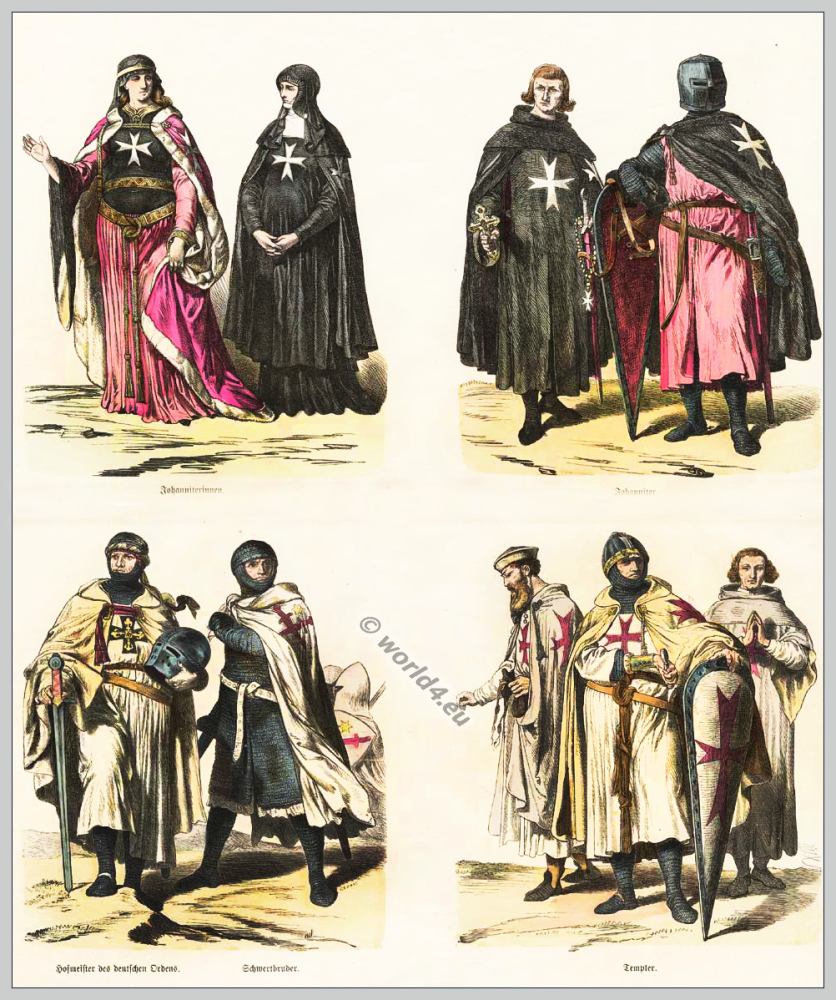
Monvesian Culture: Temperamental Orders

Temperamental Philosophy is a major factor of human culture, and orders dedicated to one of its six divisions can be found throughout the human-controlled world--including followers from any race or nationality.  While the Temperamental Orders are not exactly united, the organization within each order follows a similar pattern--and the titles used by them are shared in common.

There are three classes of Temperamental Orders:  Religious, Military, and Arcane.  A religious order may operate solely on its own, but is typically accompanied by a military order.  An arcane order under this tradition does not operate independently, but in tandem with a military or religious order--often both. 

Religious Orders

There are three basic tiers of leadership in the temperamental orders:  Prelates (who govern an order), Ministers (who attend to particular congregations and institutions), and Teachers (who assist ministers and attend to branches of organizations and institutions).  These are almost always clerics--but not all clerics who associate with the Temperamental Orders are part of a religious order (many are part of a military order, see below).