Tuesday, September 8, 2015

Factions of Monvesia: Crusaders & the Ninety-Nine

Time to go the other direction:  Instead of adapting elements of Monvesia to 5th Edition, I want to to explore how elements of 5th Edition might be adapted for use in Monvesia.  For example, the RPGA has introduced Factions into D&D organized playe.  Factions are major power groups that player characters can interact with, gaining prestige and rank--offering a chance not only of mechanical benefit, but also role-play opportunities.

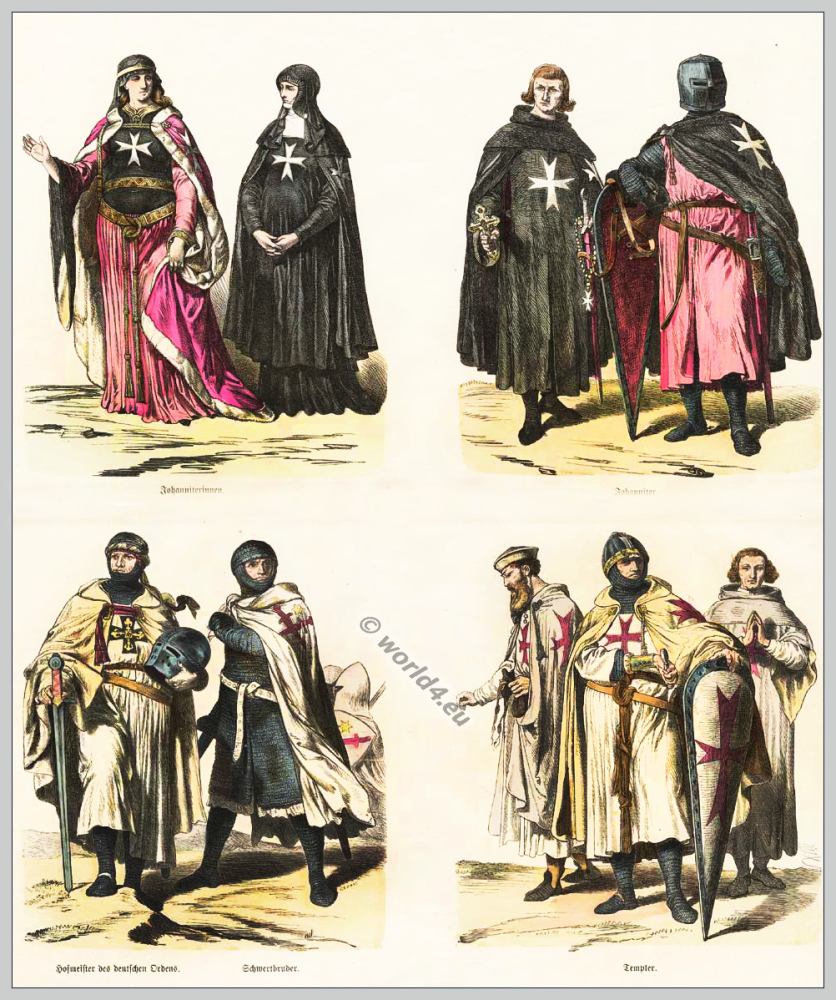
In the past, I have introduced two faction-type organizations in Monvesia:  the Crusaders of the Temperamental Orders (detailed in an earlier post) and the League of Ninety-Nine.  As I have pondered this topic, I have considered adding an "Imperial Order" as well as factions tied to other races.  However, in the interest of keeping development of the world tied to the player experience, I won't detail any additional factions they become necessary in play.
Okay, so maybe that last part was wishful thinking.

Wednesday, September 2, 2015

Monvesian Culture: Temperamental Orders

Temperamental Philosophy is a major factor of human culture, and orders dedicated to one of its six divisions can be found throughout the human-controlled world--including followers from any race or nationality.  While the Temperamental Orders are not exactly united, the organization within each order follows a similar pattern--and the titles used by them are shared in common.

There are three classes of Temperamental Orders:  Religious, Military, and Arcane.  A religious order may operate solely on its own, but is typically accompanied by a military order.  An arcane order under this tradition does not operate independently, but in tandem with a military or religious order--often both. 

Religious Orders

There are three basic tiers of leadership in the temperamental orders:  Prelates (who govern an order), Ministers (who attend to particular congregations and institutions), and Teachers (who assist ministers and attend to branches of organizations and institutions).  These are almost always clerics--but not all clerics who associate with the Temperamental Orders are part of a religious order (many are part of a military order, see below).

Sunday, August 30, 2015

Level Titles and Tiers of Play

A staple of early editions of Dungeons & Dragon was level titles:  Terms that could be used by characters in-game to identify each other by level without breaking the mood.  Level titles fell out of favor, however--but were later "replaced" by the concept of "tiers of play" in 4th & 5th editions.

Tiers of play are groupings of levels that identify the overall power and influence of an adventurer or party.  In the current edition of the game, the tiers are divided as:  Levels 1 - 4, levels 5 - 10, levels 11 - 16, and levels 17 - 20.  Unlike 4th edition, these tiers do not have names, but are simply identified as "FirstTier," Second Tier," etc.

The text of the Player's Handbook identifies the First Tier as "apprentice" and implies the Second Tier could be understood as "Master"  ("characters come into their own").  Building from these, Third Tier is "Grand Master," and Fourth Tier is "Paragon."
5th level as the beginning of Master tier supports my theory (introduced in this post) that "Name Level" since 3rd edition has been 5th level.

Wednesday, August 26, 2015

New Equipment: Robe Armor

The following new types of defensive non-armor are available in Monvesia.  The robes below are generally equivalent to light armor, but do not count as armor for the sake of proficiency requirements (allowing sorcerers and wizards to benefit).  Robes are donned and doffed in the same amount of time as light armor.  They do not restrict movement in a way to affect the somatic components of spell casting.
Robe armor is not always a good option--but does serve well any wizard or sorcerer with a low dexterity score.


[Light] Robes are standard robes which are purchased as clothing. They can range in price from 5sp for mundane robes to over 15gp for extravagant ones. Light robes offer no significant protection, and are presented here only for comparison purposes.
5sp to 15+ gp, AC 10 + Dex modifier, 4 lbs.

Sunday, August 23, 2015

Monvesian Culture: Games

For me, one of the more fascinating additions to 5th edition D&D is tool proficiency in gaming sets. It is clearly the evolution o the 3.x-era d20 Gamble skill.  It shows that knowing how a particular "game" (as specific as chess, or as generic as cards or dice) works an help in social integration--beyond mere gambling, but certainly including that option.  You can use a Wisdom check to gamble (or learn a new variation), a Charisma check to win favor (or throw a game), and Intelligence check to comment on an opponent's strategy.  It is a role-playing opportunity, and I appreciate that it was included.  Games within games.

Games are played throughout the world.  The same game can be played by different age groups for different reasons--such as to learn problem-solving skills, to develop social skills, or even to win money.  The games that originate in a particular culture help to define what it values.  Here are some of the gaming sets available in Monvesia, and the cultures that produced them.  Each set an be used to play multiples games, and proficiency in the set applies to most of these (unless the story requires otherwise).
While each of the gaming sets below comes from a particular culture, these have all achieved wide-spread use throughout Monvesia.  These replace the gaming sets from the Player's Handbook.  Those which are direct replacements are noted.

Chadrak

Inspiration: Checkers/Draughts, Chess, Dragon Face, Janggi, Shogi
Replaces:  Dragonchess
Cost:  1gp
Weight:  1/2 lb.

From the dwarves comes a chess-like game called chadrak (shadraque in parts of Cuorria), which is played on a grid with two-sided tiles.  The grid is always square, but can very in size from as small 7 x 7 to as large as 14 x 14 (8 x 8 and 12 x 12 are the most common); typically, these grids are woven mats.  The tiles can be circular or square, each carved from stone.  Each tile bears an identical symbol on each side, painted in opposing colors:  red and white, red and black, or even black and white.  Whatever the pair of colors, it is consistent throughout the set--and is even reflected in the woven grid.

Saturday, August 22, 2015

History of Monvesia: Sixth Age

ybe = years before the [Divine Drajan] Empire
ye = year of the [Divine Drajan] Empire
The most likely "universal" date count.
ybk = years before the Kleimland
yk = year of the Kleimland
The dates as counted during my original campaign in this world.
The Sixth Age covers the entirety of campaign time--including those major events which directly effected the backgrounds of my first group of player characters.


Sixth Age / Aqueous Age

Circa 995 ye (Circa 5 ybk) 

  • During the short-lived Badenburg Rebellion, Rathbone I is killed. He is succeeded by his son, King Theodore II. Duke Harlan of Badenburg is executed; a loyalist cousin of the new king succeeds Harlan as Margrave of Badenburg; the nobles that supported Harlan are stripped of their titles, and the merchant families that funded him are massacred.

After 995 ye (Less Than 5ybk) 

  • The Duke of Waschbar and King of Vastria publicly disagree over the continued Verderben conflict. The Duke threatens to back out of the Vasterreich if the war continues.

998 ye (1 year before the Kleimland)

  • Theodore II sent troops to the River Kleim with the intention of annexing the Eastern Baronies region, including Kynnys, to the Hindland

Friday, August 21, 2015

History of Monvesia: Fifth Age

ybe = years before the [Divine Drajan] Empire
ye = year of the [Divine Drajan] Empire
The most likely "universal" date count.
ybk = years before the Kleimland
yk = year of the Kleimland
The dates as counted during my original campaign.
If the Elder Ages were the "Legendary" era, then the Fifth Age was the "Historic" era--it marks the time when written histories became more prevalent--and exact dating was more easily accomplished.  The foundation of the Empire marks the beginning of this age.


Fifth Age / Vacuous Age

1st Year of the Empire (998 ybk)

  • Foundation of the Drajan Empire.

    Circa 200 ye (Circa 800 ybk)

    • Birth of the blue dragon Oerloeg.

    Circa 300 ye (Circa 700 ybk)

    • First Senary Council, during which the [Imperial] Temperamental Orders were established.  In opposition to the writings of Mohas, these orders openly venerate the Saints.  24 "archsaints" are chosen to represent human history and the temperamental philosophies--including both Baltus and Mohas.